Blogs●0 min read●
Why the “Tung Tung Tung Sahur” Meme Took Over the Internet
How “Tung Tung Tung Sahur” Became One of the Internet’s Biggest Viral Trends
If you’ve spent any time scrolling through TikTok, Instagram Reels, or YouTube Shorts recently, you’ve probably heard the phrase “tung tung tung sahur” at least once. Maybe it appeared in a chaotic meme edit, an AI-generated video, or a random clip that somehow made absolutely no sense while still being strangely funny.
That’s exactly why “tung tung tung sahur” became such a massive internet phenomenon. The phrase spread across social media at incredible speed, turning into a global meme that millions of people now recognize instantly—even if they still have no idea what it actually means.
The rise of “tung tung tung sahur” perfectly reflects the current state of internet culture, where absurd humor, repetitive sounds, AI-generated visuals, and chaotic trends dominate online spaces. What started as a short and bizarre clip quickly evolved into one of the most recognizable examples of modern “brainrot” humor.
What Makes “Tung Tung Tung Sahur” So Addictive?
The success of “tung tung tung sahur” comes from something surprisingly simple: repetition.
The phrase is rhythmic, strange, and incredibly easy to remember. After hearing “tung tung tung sahur” a few times, it gets stuck in your head almost immediately. That’s exactly the kind of content social media algorithms love because it captures attention within seconds.
Modern viral memes are designed for instant reactions. People no longer need context or detailed explanations to engage with a trend. If something sounds funny, looks bizarre, or feels absurd enough, users start sharing it instantly.
That’s why “tung tung tung sahur” exploded online so quickly. The meme combines repetitive audio, surreal visuals, awkward AI animation, and random humor into a format that feels impossible to ignore while scrolling.
The Real Meaning Behind “Tung Tung Tung Sahur”
Even though “tung tung tung sahur” became famous as a meme, the phrase actually has cultural roots.
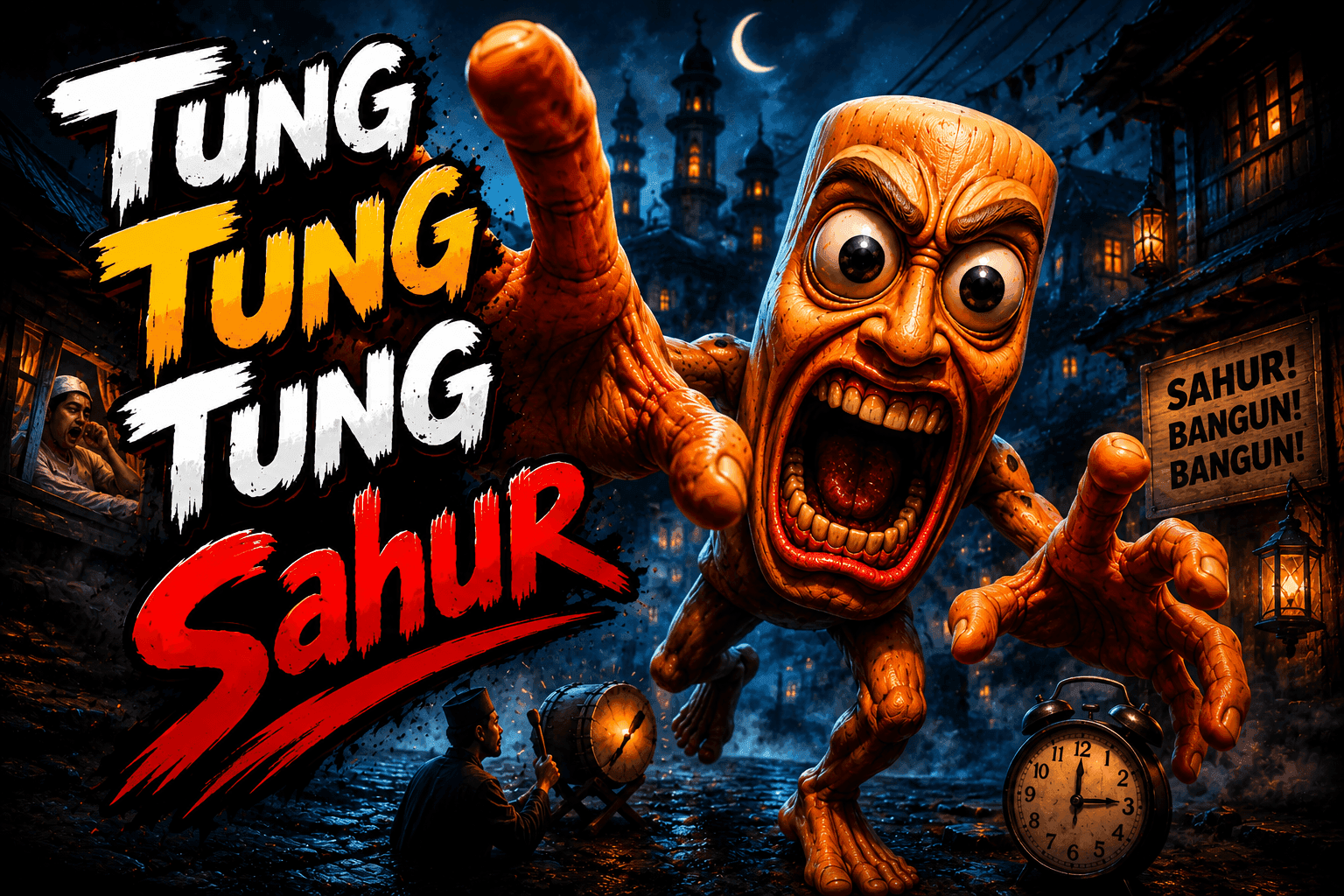
The word “sahur” refers to the pre-dawn meal Muslims eat during Ramadan before beginning their daily fast. In many Muslim communities around the world, there is a tradition where people walk through neighborhoods before sunrise beating drums or making rhythmic sounds to wake residents up for the meal.
The “tung tung” portion imitates the sound of those drums.
Originally, these sounds had an important practical purpose. They helped communities wake up in time for sahur before the fasting day officially began. For generations, this ritual formed part of Ramadan traditions in many regions.
However, once “tung tung tung sahur” entered internet culture, the original context gradually disappeared. Social media transformed the phrase into something surreal, humorous, and completely detached from its traditional meaning.
How “Tung Tung Tung Sahur” Became a Brainrot Meme
The internet now has an entire category of humor often referred to as “brainrot.” This style of content is intentionally chaotic, repetitive, overstimulating, and nonsensical. Brainrot memes are not supposed to make perfect sense. In fact, their randomness is exactly what makes them funny.
“Tung tung tung sahur” fits perfectly into this category.
The meme became especially popular after creators started pairing the phrase with bizarre AI-generated characters, distorted animations, robotic voices, and low-quality surreal visuals. These elements gave the trend an uncanny and dreamlike feeling that internet audiences found hilarious.
Part of the humor comes from confusion itself. Viewers laugh not because they fully understand the joke, but because the entire experience feels absurd and unexpected.
This style of internet humor has become increasingly common in recent years. Other viral trends featuring strange phrases and surreal AI imagery have followed similar patterns, but “tung tung tung sahur” stood out because of how quickly it spread globally.
Why AI Helped “Tung Tung Tung Sahur” Go Viral
Artificial intelligence played a major role in the success of “tung tung tung sahur.”
AI-generated content has become deeply connected to modern meme culture because it allows creators to make strange and surreal videos extremely quickly. The awkward movements, unnatural facial expressions, distorted visuals, and robotic voices generated by AI often feel unintentionally funny.
That strange aesthetic matches perfectly with brainrot humor.
In the case of “tung tung tung sahur,” the bizarre AI-generated wooden character became one of the meme’s most recognizable features. The low-quality animation style made the meme feel even more chaotic, which encouraged users to remix and repost it repeatedly.
The internet currently thrives on content that feels weird, unsettling, and impossible to explain logically. “Tung tung tung sahur” became successful because it embraced that style completely.
Why Everyone Started Repeating “Tung Tung Tung Sahur”
One of the most fascinating things about “tung tung tung sahur” is how quickly it crossed cultural and language barriers.
Millions of people who had never heard the word “sahur” before suddenly found themselves repeating the phrase online. The meme spread through TikTok edits, gaming videos, reaction memes, parody clips, livestreams, and comment sections until it became impossible to escape.
Most people sharing “tung tung tung sahur” were not focused on its original meaning. Instead, they participated because repeating the phrase became part of the internet joke itself.
That’s how modern meme culture works. A sound becomes popular, people remix it endlessly, and eventually the trend becomes larger than its original source.
The Internet’s Obsession With Absurd Humor
The popularity of “tung tung tung sahur” says a lot about the current state of online entertainment.
Today’s internet rewards content that creates immediate emotional reactions. Loud audio, strange visuals, repetitive phrases, and absurd humor all perform well because they grab attention quickly. Social media platforms are designed to keep users watching, and chaotic memes are extremely effective at doing exactly that.
Brainrot humor thrives because it feels fast and emotionally stimulating. Users don’t need to think deeply about it. They simply react.
“Tung tung tung sahur” became one of the clearest examples of this new era of internet culture, where randomness itself becomes entertainment.
Conclusion: Why “Tung Tung Tung Sahur” Became Impossible to Escape
The viral success of “tung tung tung sahur” perfectly captures how internet culture works in 2026. A traditional phrase connected to Ramadan evolved into one of the world’s biggest meme trends through repetition, AI-generated absurdity, and nonstop social media sharing.
What made “tung tung tung sahur” so powerful was not deep meaning or clever storytelling. It was the combination of chaotic humor, bizarre visuals, catchy repetition, and instant recognizability.
In many ways, “tung tung tung sahur” represents the peak of modern brainrot culture—confusing, addictive, surreal, and somehow funny even when nobody can fully explain why.


Barsha Bhattacharya is a senior content writing executive. As a marketing enthusiast and professional for the past 4 years, writing is new to Barsha. And she is loving every bit of it. Her niches are marketing, lifestyle, wellness, travel and entertainment. Apart from writing, Barsha loves to travel, binge-watch, research conspiracy theories, Instagram and overthink.